
Bengali Wedding Menu Guide: Course by Course, for Mumbai
Planning a Bengali wedding menu in Mumbai? Here's how to build it course by course, from fish fry and luchi to kosha mangsho, pulao and sandesh.
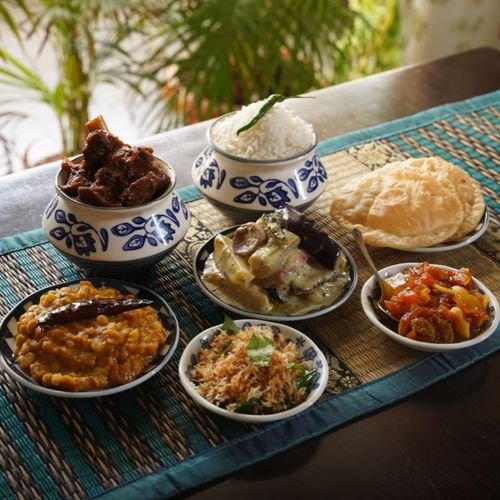
Ask anyone about a Bengali wedding they went to years ago and, sooner or later, they'll tell you what they ate. The menu is a matter of family pride. Your grandmother will have opinions about it. So will your cousins.
Below is a Bengali wedding menu laid out course by course, with ideas for each function and a few practical things to sort out with your caterer in Mumbai. Use it as a starting point for those family discussions.
Start with the fish
A traditional Bengali wedding menu nearly always has fish in it somewhere. It might be a fish fry as a starter, a rui or katla curry, bhetki, or prawns in a rich gravy. For a lot of families, a wedding without fish just doesn't feel like a Bengali wedding. Decide on your fish first, then build everything else around it.
The menu, course by course
Starters
Guests eat these while they arrive and catch up, so pick things that are easy to hold and eat standing.
- Fish fry, a crumbed bhetki fillet fried golden. The classic.
- Kolkata-style chicken cutlet, flat and crisp.
- Beguni, slices of brinjal in gram flour batter, fried.
- Vegetable chop or paneer cutlet for vegetarian guests.
Luchi and pulao
Luchi are small, puffy deep-fried breads made with refined flour. Set up a live luchi counter, where they're fried in front of guests, and there will always be a queue.
Basanti pulao is fragrant yellow rice, a little sweet, cooked with ghee, cashews and raisins. It goes with the meat and fish dishes.
Vegetarian dishes
Plan at least two. Your vegetarian guests need them, and Bengali vegetarian dishes are worth eating in their own right.
- Alu'r dum, potatoes in a thick, mildly spiced gravy. Luchi's best friend.
- Shukto, a bitter-sweet mix of vegetables, often served at the start of a traditional meal.
- Chhanar kalia, fresh chhana (soft cottage cheese) in a rich gravy.
- Dhokar dalna, fried lentil cakes simmered in a spiced gravy.
- Potoler dolma, pointed gourd stuffed and cooked in gravy.
Fish and prawns
- Doi maach, rui or katla in a yogurt gravy.
- Chingri malaikari, prawns in a creamy coconut milk gravy. A favourite at weddings.
- Bhapa chingri, prawns steamed in mustard sauce, if your family likes a sharper flavour.
Meat
Kosha mangsho is slow-cooked mutton in a dark, deeply spiced gravy, and for many families it's the dish the whole menu is planned around. Add chicken rezala or chicken kosha for guests who'd rather have chicken.
Chutney, then sweets
A Bengali meal has a chutney before dessert. Tomato and date (khejur) chutney is the usual one. Aamshotto chutney, made with sweet dried mango, is a lovely change.
Then the sweets. Bhapa sandesh, which is steamed. Rosogollar payesh, a rice pudding with rosogolla in it. And if your wedding is in winter, something made with nolen gur, the date palm jaggery that's only around for a few months of the year.
Different food for each function
A Bengali wedding isn't one meal. It's several events, and each one calls for something different.
- Engagement: appetisers, a few live counters, drinks and desserts.
- Mehendi: bright food stations, cool drinks and counters guests can visit between dances.
- Haldi: keep it light and traditional, so nobody's too full for the ceremonies.
- Sangeet: a bigger buffet for a long, loud evening.
- Wedding day: the full traditional feast above.
- Reception: your signature dishes, the best desserts and well-planned food stations.
When half the guests aren't Bengali
Plenty of Mumbai weddings bring together families from different parts of India. Keep the Bengali feast at the heart of the wedding day and add North Indian, South Indian or Continental dishes alongside it. Kolkata Chinese, like chilli chicken and fried rice, tends to go down well with both sides.
Ask both families about vegetarian guests and food allergies early, well before the menu is final, and tell your caterer.
Planning it with your caterer
Share the basics
Tell your caterer the guest count for each function, the venue, date and time, your budget, and any dishes the family won't do without. A rough guest count is fine to start with.
Shape the menu together
A good caterer will suggest a menu for each function and adjust it around your favourites and your guests' dietary needs.
Confirm everything
Agree on the final menu, quote, date and arrangements before you treat the booking as done.
Give enough notice
We need at least 7 days' notice for any event, so we can buy fresh ingredients and grind our masalas. With several functions to plan, the earlier you talk to us, the better.
Frequently asked questions
Do you cater Bengali weddings across Mumbai?
Yes. Our kitchen is in Powai, and we cater across Mumbai, including Andheri East, Andheri West, Powai, Marol, Sakinaka, MIDC, BKC, Goregaon, Vile Parle, Bandra, Juhu and Jogeshwari. Tell us your venue and we'll confirm the arrangements.
Can you mix Bengali food with other cuisines?
Yes. We put Bengali dishes alongside North Indian, South Indian, Kolkata Chinese and Continental food, so everyone finds something they love.
Can you set up live counters?
Yes. Live luchi frying and kathi rolls are popular at weddings. Ask us about other counters when we plan your menu.
How do I get a quote?
Send an enquiry from our wedding catering page with your date, guest count and venue, or call +91 96740 12126. You don't pay anything to enquire. We'll talk through the menu and quote with you first.