Kosha Mangsho: Why Bengal's Slow-Cooked Mutton Is Worth the Wait
What makes kosha mangsho different from an everyday mutton curry, what to eat with it, and how to order Bengal's slow-cooked mutton from our Powai kitchen.
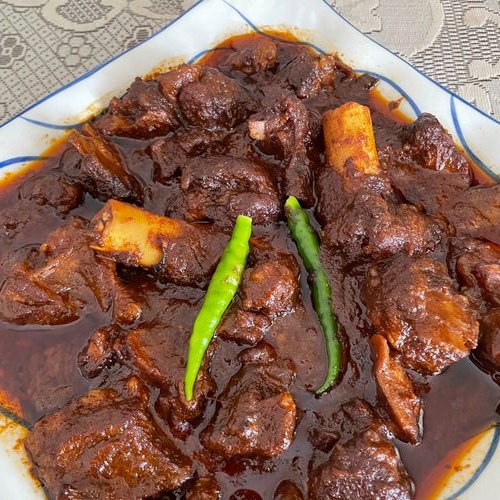
Some dishes you eat straight away. Kosha mangsho is one you wait for. Kosha mangsho is Bengal's slow-cooked mutton, dark and thick, with the masala clinging to every piece, and this is a short guide to what makes it different from an everyday mutton curry, what to eat with it and how to order it from our Powai kitchen.
What the name tells you
Mangsho is the Bengali word for meat, and on a Bengali table it nearly always means mutton. Kosha comes from koshano, a way of cooking meat slowly in its spices with very little water. The meat and masala are sautéed and stirred for a long time, so the flavour and moisture stay in.
So the name is really a description of the method. There's no long list of secret ingredients behind it. Recipes for the dish tend to lean on ordinary things: onions, ginger and garlic, yoghurt, turmeric, chilli and mustard oil, the sharp, pungent oil that Bengali kitchens cook with. What turns those into kosha mangsho is time.
Why kosha mangsho isn't just another mutton curry
Most mutton curries are built around their gravy. You pour it over rice and there's plenty to go round. Kosha mangsho goes the other way. The meat cooks in its own fat rather than in added water, and the gravy that's left is thick enough to coat each piece instead of pooling on the plate.
That long stirring does two jobs. It browns the onions and spices slowly, which gives the dish its deep colour and rounded taste. And it gives the mutton the hours it needs to turn tender.
Where the dish came from is less clear. One theory, often repeated but not proven, is that Odia cooks who moved to Bengal for work during British rule brought it with them, and that Odisha's mangsa kassa is its older cousin. Nobody can say for sure. What's easier to say is where it sits today. It's traditionally cooked for Kali Puja, and our own menu sums it up as Sunday lunch, sorted.
Why we ask for a few hours' notice
You can't hurry this kind of cooking, and that fits the way our kitchen works. Howrah Bridge is a cloud kitchen in Powai that prepares home-style meals to order, and we ask you to order 5–6 hours ahead. On our menu, kosha mangsho is described as slow-cooked mutton in a rich, deeply spiced gravy, and it costs ₹550.
If it's for lunch, order in the morning. If it's for dinner, early afternoon gives us enough time. We're open from 11:00 am to 9:00 pm, every day, and we deliver across Mumbai from Powai. Delivery charges are based on actual costs, so check with us that we can reach your area.
What to eat with kosha mangsho
Because the gravy is thick rather than runny, kosha mangsho wants something to scoop it up or soak into. Rice, paratha and luchi (puffed, deep-fried bread) are the usual partners. From our menu, these go well with it:
- Basonti Pulao, ₹220. Fragrant yellow rice, and the pairing for a festive table.
- Pea Pulao, ₹140, if you'd like something a little lighter.
- White Rice, ₹80. The plainest choice, which leaves the mutton to do the talking.
- Tomato Khejur Chutney, a tomato and date chutney, ₹130, for something sweet and sharp at the end of the meal.
Kosha mangsho, chicken kosha or mutton dak bungalow?
If you're choosing between the meat dishes on our menu, here's a simple way to think about it.
- Kosha Mangsho, ₹550, for slow-cooked mutton in a thick, deeply spiced masala.
- Chicken Kosha, ₹420, the chicken version, for anyone who'd rather skip mutton.
- Mutton Dak Bungalow, ₹550, a different mutton dish with its own story, which we'll save for another day.
Do tell us about any allergies or dietary needs before you order, and we'll help you pick.
Bringing it to a party
On our catering page, kosha mangsho is the dish we call the heart of the feast. We curate Bengali menus around dishes such as kosha mangsho, basonti pulao, fish fry and bhapa sandesh, alongside Indian, Chinese and Continental options for guests who want something else. We cater indoors and outdoors, with vegetarian and non-vegetarian menus made around your guest list.
For a party, plan at least 7 days ahead so we can talk through your menu, guest count and arrangements. Our earlier guide to a Bengali wedding menu covers how it fits into a full spread.
Frequently asked questions
How much does kosha mangsho cost?
Kosha mangsho is ₹550 on our menu. Prices and availability are confirmed by our team when you order, and delivery charges are additional.
How far ahead should I order it?
Please order 5–6 hours ahead. Every dish is cooked to order, and slow-cooked mutton needs that time.
Can I order kosha mangsho on Zomato?
Yes. You can order Howrah Bridge on Zomato for everyday meals. For larger orders and catering, contact us directly on +91 96740 12126.
If you're craving it, open our menu, select Kosha Mangsho to start a WhatsApp enquiry, and give us those 5–6 hours. Our team will confirm your order directly.